Author Archives: charitythomas

Unknown's avatar

About charitythomas

I am a highly skilled, innovative and experienced Art Department Coordinator, Associate Producer and Production Supervisor looking to bring my skills in-house. While working with talented and globally recognized musicians, producers, directors and networks such as Viacom, BP, HBO, Buscuit Filmworks, Anonymous Content, RSA, MJZ, Goldcrest Films, ESPN, Target and MAC Cosmetics, Barry Levinson and Spike Lee. I have a collaborative leadership style with a proven track record of producing projects on time and budget without compromising quality. I hold an M.A in Media Studies from The New School University and a Bachelor of Arts in Radio, TV, and Film from Howard University and extensive experience as a freelancer. I am looking for a home to develop and build a long lasting production team. Find me here: http://charitythomas.org

Chapter I- Never Trust a Big Butt and a Smile: Black Manhood Part 2

Sexuality was also a source of shame because of the importance whites gave it: the slightest hint of sexual impropriety could get one killed. The reality of black men’s lives is often the antithesis of emotional equality, reciprocal vulnerability, and communicative intimacy. When the thug mentality is about street survival, the fundamentals of a loving human relationship are outside of the parameters of survival, leaving one open to cracks in the armor of invincibility of the street. To care too much for anyone, even one’s self, makes one vulnerable.

Drug dealing, pimping and unbridled individualism, as portrayed in the Blaxploitation classic Superfly also came to define the black male dominated film boom of the 1990’s. The visual representations of black manhood in Superfly encapsulate the general mood of most of the Blaxploitation films. The story of Youngblood Priest, a drug dealer and pimp, who wants to get out of the game, contains one of the sexiest love scenes between blacks on film. Priest and Georgia, strategically covered in bubbles in the bath set to Curtis Mayfield’s sensual and revolutionary soundtrack is a beautiful scene amidst a misogynistic, unloving, counterrevolutionary film. Donald Bogle in Toms, Coons, Mulattoes, Mammies, and Bucks: An Interpretative History of Blacks in American Film observes in that Superfly’s sex scene “like the sex scenes in other black films…frequently was more graphic and lingering than any such scene in white movies of the time and looked as if it had been inserted simply to play on the legend of blacks’ high-powered sexuality. While the movies assiduously sought to avoid the stereotype of the asexual tom, they fell, interestingly enough, into the trap of presenting the wildly sexual man” (240). It was gratuitous in that it did nothing to drive the plot or give any insight into the characters. Sex was a transaction to Priest because he was after all, a pimp. Despite his tenderness with his “main lady,” it did not stand in the way of his plan to flood his community with enough drugs to finance his freedom or cheating on Georgia.

The stereotype of the nihilistic drug dealing thug in films such as Menace II Society and Baby Boy that dominated the visual landscape of the early 1990’s continues through today, now mostly in music videos. With Blaxploitation’s renaissance in the early 1990’s, the hip-hop generation was reintroduced to these images when their reality closely paralleled those represented in those films. “The Hughes brothers gave us horrific displays of Black-on-Black youth violence at a time when young violent criminals were being labeled ‘super-predators’ and experts lamented the rise of youth crime, predicting a 20-25 percent increase in the youth population by 2006” (Kitwana 127). It was when America’s essential underground drug economy was being glorified and demonized simultaneously. The drug boom of the 1980’s created a new brand of drug dealer that was young and black, with nothing to lose. This model of behavior is the dominant thematic model for many of today’s music videos. Young men, who were then the problem of the day on the nightly news, are now marketing fodder in popular entertainment.

If love is not present in our imaginations, it will not be present in our lives: Black Love and the Hip-Hop Generation- Intro

Introduction-

This thesis will examine how loving black relationships are being portrayed in film, and will analyze the possible social effects of those portrayals on the marital/ committed relationship practices of the hip-hop generation . Loving relations will be defined as a sexual relationship where emotional equality, reciprocal vulnerability, and communicative intimacy are apparent and motivated independently of the sexual stigmas and stereotypes of, what cultural critic bell hooks commonly describes as, America’s “white supremacist capitalist patriarchy” . Being a member of the hip-hop generation, I experience the daily assault not just on my black womanhood, but also my humanity. The images of male-female relationships that have been normalized are so pathological and hateful, creating such unloving environments, that I wanted to know where these ideas were formed. Though this thesis focuses mostly on film, the convergence of film and television (through cable, VCR’s and DVD’s) makes it necessary to mention the interrelated qualities of music videos and contemporary films. This thesis investigates how the hip-hop generation’s imaginations are fed.
This paper hypothesizes that the lack of visual representations of blacks loving each other (as opposed to simply being sexual objects), given that the media operates as powerful social educator, adds to the risk of a lack of loving in everyday life. Stories of courtship, romance and love have been storytelling fodder in some form since antiquity. The powerful yet seemingly invisible role of film and television as social educator has been greatly chronicled. Yet influence of film and television specifically on the hip-hop generation’s black sexual relationships is only recently being researched . There is still a gap in the body of research regarding black loving relations as an indicator of emotional well-being. Violence, HIV prevention and teen pregnancy are the general research catalysts to study media’s relationship to this particular age group as opposed to marriage or current interpersonal relations. This paper contributes to current studies using discursive methods regarding loving representations in order to analyze black film images. The visuals being analyzed have been chosen because of both their relevance to the body of black media images and their mainstream appeal. More obscure images, while interesting for scholarship, were omitted because of an assumptive lack of influence on the relationship practices of the hip-hop generation. I will analyze the selected films based on the romantic theme and plot in instances, as well as the driving forces of the film. The way we, the hip-hop generation, have been taught to love has such an important influence on how we will teach to love. As such, I will focus on intra-racial heterosexual, intimate/sexual romantic screen relationships, from the post-civil rights and feminist movements of the early 1970’s through the end of the century, and I will argue that they serve as a microcosm of community. I looked for some of the ways hip-hoppers have been taught to love.
Black representational media readings have historically been based in the reading of stereotypes. Stereotyping defines a way of seeing a visualized “other” outside of the flow of experience. Sexuality in relation to stereotyping blacks shall be important to this discussion.
Sexuality, particularly after the dissolution of the Hayes Code , is a major part of American film’s visual and thematic landscape. Black sexuality is peculiar because of its schizophrenic political and social history in reality and in the American imagination. D. W. Griffith’s Birth of a Nation not only seared the American imagination with the use of innovative and groundbreaking film techniques (such as the introduction of the long narrative, the close-up, and the wide angle shot ); but also promulgated a set of Americanized racist stereotypes to a global audience, stereotypes which are still actively perpetuated and must be considered when discussing blacks in film. Descriptions of the stereotypical mammy and exotic primitive characters for black women and the brute Negro (who evolved into the thug) for black men are the most sexually charged of these still perpetuated visual images . Historically most stereotypical black portrayals evolved from literature to the stage to film and television screen. I am interested in exploring new images created by a people thinking of themselves in new ways.
Currently, loving relationships in the black community are fractured. According to M. Belinda Tucker and Claudia Mitchell-Kernan:
Between 1970 and 1990, the proportion of Black women who had married by age 24 decreased by half from 56% to 23%; while the proportion who had ever married declined from 83% to 63% …. Although there was a similar decline in early marriage in the general population (from 64% to 37%), the proportion of women in the general population who had ever married stayed the same (77%). Over the same period, Black divorce rates, as well as that of U.S. women as a whole, nearly quadrupled. However, since divorce was much higher among Blacks even in 1970, the 1990 differential is quite striking—358 divorces per 1000 women among Blacks, compared to 166 among women overall. African American women are also less likely than other groups of women to remarry after divorce or widowhood. The explosion in divorce rates is one factor in the greatly changed living arrangements of children. In 1970, just under one-third of Black children were being raised in single parent homes. By 1990, that figure had increased to 55% (compared to 25% in the general population) (“Understanding Marital Decline”).

As a result of economic, social, and political disenfranchisement, the images seen of blacks loving each other do not inspire romantic expectations and can subsequently lead to a lack of love in everyday life. I will present some examples of how fictional media images both emulate and propagate the lack of positive loving images of blacks.

Defining Black Loving Relations for the Hip-Hop Generation

I have defined loving relations as: a sexual relationship where emotional equality, reciprocal vulnerability, and communicative intimacy are apparent and motivated independently of the sexual stigmas and stereotypes of America’s “white supremacist capitalist patriarchy”.
Three separate ideas have informed this definition. I looked to bell hooks, first and foremost, for insight into blacks in media but also for insight into loving relationships in the black community. She also provided strong theoretical critiques from a cultural studies and feminist perspective. In hooks’ book Salvation the statement “If love is not present in our imaginations, it will not be there in our lives,” gave a title to this thesis and led me to further want to look into the question of filmic representation within, “white supremacist capitalist patriarchy” (53). “When it comes to issues of love, the mass media basically represent black people as unloving. We may be portrayed as funny, angry, sexy, dashing, beautiful, sassy and fierce but we are rarely represented as loving” (51). She goes on to mention the failure for blacks in positions of power to create “new images of blackness” that do not depend on the caring for whites – and caring for each other. This view includes the historic and economic realities of black representation in film: Black economic power and authorship means nothing if the product created only perpetuates oppressive racial stereotypes for the turning of a profit.
Secondly, Cornell West’s Race Matters provided insight into the distortion of black sexuality in the American (specifically) and colonial (generally) imagination as a method of control and propaganda of oppressed people. Sexuality is not something commonly discussed among blacks and in its most recent commodification –again- provides an easy visual. Cornel West states:
Black sexuality is a taboo subject in America principally because it is a form of black power which whites have little control- yet its visible manifestations evoke the most visceral of white responses, be it one of seductive obsession or downright disgust. On the one hand, black sexuality among blacks simply does not include whites, nor does it make them a central point of reference. It proceeds as if whites do not exist, as if whites are invisible and simply don’t matter. This form of black sexuality puts black agency center stage with no white presence at all. (125)

The current creation of images of black people in intimate sexual situations perpetuates standard racist stereotypes under the auspices of black agency. Although black sexuality has more visual accessibility due to music videos, music video production is still produced and controlled by mainstream capitalist interests. Those interests maintain the black body’s position as the same marketable commodity that has defined it since the first arrival of black Africans on these shores.
I looked finally to Anthony Giddens’ The Transformation of Intimacy: Sexuality, Love and Eroticism in Modern Societies for insight into the changing nature of intimacy in modern society. Giddens examines “the potentialities of the ‘pure relationship’, a relationship of sexual and emotional equality, which is explosive in its connotations for pre-existing forms of gender power” (2). The construction of gender is challenged by egalitarian sexual relations which redefine gender roles. I wanted to see how this dynamic of “pure relationship” transferred to the black community. Images of intra-racial, romantic, heterosexual relationships which move toward “pure relationships” are rare. It is easier to show sexuality — it is tactile and more visually dynamic; and showing blacks in sexual situations is part of racism’s current subtle double entendre.

The Hip-Hop Generation
The generation of adults now 20-35 is the one most heavily influenced by hip-hop culture . Hip-hop began in the late 1970’s as a burgeoning musical art form and evolved into a “fad” that has lasted almost thirty years. The beneficiaries of the progress made during the Civil Rights Movement’s progress helped propel this grassroots urban music form into a now multi-million dollar industry. In his book The Hip Hop Generation: Young Blacks and the Crisis in African American Culture, Bakari Kitwana defines this demographic as:
…hip-hop generationers — those young African Americans born between 1965 and 1984 who came of age in the eighties and nineties and who share a specific set of values and attitudes. At the core are our thoughts about family, relationships, child rearing, career, racial identity, race relations, and politics. Collectively, these views make up a complex worldview that has not been concretely defined.” (4)

The lives of hip-hop generationers (particularly those born between 1965- 1975) are not specifically marred by the same degree of racism the previous generations experienced. There are no social and legal Jim Crow laws, yet the racism they experience has more to do with class and its subtler social injustices and humiliations. At the same time, technological advances have created a mediated world driven by a global capitalism. “We live in an age where corporate mergers, particularly in media and entertainment, have redefined public space, the viewing public is constantly bombarded by visual images that have become central to the identity of an entire generation” (Kitwana 9).
Youth oriented means more television oriented. Movies are seen on television. Television remediates film, using Bolter and Gruskin’s adaptation of the word as “the way in which one medium is seen by our culture as reforming or improving upon another” (59). Coming of age with the VCR and the expansion of cable, watching films on television is normalized . It can be argued that this generation makes no real distinction between film and television. “Today, more and more Black youth are turning to rap music, music videos, designer clothing, popular Black films, and television programs for values and identity” (Kitwana 9). The batch of children born after 1965 entered a world their parents generation had created, and were learning themselves, leaving their children to either follow their parents’ baby boomer models of mating and courtship or learn it from the new media teacher- television.

Film as Social Teacher
The films discussed in this thesis present various ways that the media could be viewed as undermining black loving relations by creating black unloving images — as well as images that can be read as loving. I believe it is not just that the same images have been recycled in newer clothes, but that the social contexts show men and women moving in such opposite directions that the space where they could express themselves lovingly is destroyed as well. In the chapter discussing relationships, the films chosen are an attempt to show sexual relationships that have shades of emotional equality, reciprocal vulnerability, and communicative intimacy.
I argue there are four interrelated points that describe how black unloving images are portrayed. The first is the distortion of black sexuality into a commodifiable transaction (such as that between pimps and whores; or masters and slaves) further legitimizing colonial mythologies. When the human body is reduced to the basics of its physical existence absent any interiority, the humanity of that body is more easily devalued. “White supremacist ideology is based first and foremost on the degradation of black bodies in order to control them. One of the best ways to instill fear in people is to terrorize them. Yet this fear is best sustained by convincing them that their bodies are ugly, their intellect is inherently underdeveloped, and their culture less civilized, their future warrants less concern than that of other peoples” (West 122-3).
Secondly, nihilism is felt throughout the black community but is acted out specifically by black males. Nihilism is defined as the “entire rejection of established beliefs, as in religion, morals, government, and laws,” and philosophically as, “the denial of all existence; rejection of objective reality or of the possibility of an objective basis for morality”. (“nihilism” def. 1 and 2) West furthers this definition of nihilism specifically in reference to the black community as “[…] the lived experience of coping with a life of horrifying meaninglessness, hopelessness, and (most important) lovelessness. The frightening result is a numbing detachment from others and a self-destructive disposition toward the world” (23).
The third point is abject materialism – as counter stance to abject poverty and as sign of middle class success. Contemporary black rappers’ celebration of possessing and obtaining material objects by any means necessary feeds not only their music video personas/performances but also informs the narrative of many films created for black audiences. Black women are often reduced to a series of body parts and are treated as objects that are easily replaced if male desire is unmet. On the other hand, black women use this as a way to gain some value from sexual transactions that they have no expectation of leading to committed relationships.
All of this contextualizes the fourth and final point: the lack of trust between black men and women. Based on history, observed behaviors and the reinforcement by the media, there is no space allotted black women and men to find a way to learn to trust each other. From music, to books, and largely the visual media of television and film, black women and men are constantly bombarded with reasons why they should not trust each other.
The chapters of this thesis are organized by the depictions of images from the point of view of black men; black women, and films that present their narrative from the dual sides, i.e. the “relationship”. In Chapter I, “Never Trust a Big Butt and a Smile” : Black Manhood, black men are represented as sexually compulsive, sexist, nihilistic thugs regardless of class. Sexuality and its performance has become the core of identity formation for the hip-hop generation. In Chapter II, “When Ya Say Ya Love Me It Doesn’t Matter- Goes Into My Head As Just Chitta Chatta” : Black Womanhood, black women are represented as sexually manipulative, emasculating and untrustworthy. Simultaneously, these same female characters are often developed in a way that supports sexist patriarchal models. In Chapter III, “Hopeless: Moving Past Postmodern Hip-Hop Adolescence”, the relationships in these films re-appropriate hip-hop’s superficial materialism and sexual manifestations. These images give examples of how the hip-hop generation is attempting to learn how to behave. The idea is to draw a line through the visuals created, discussing manhood and womanhood, and the interactions that should lead to family. In the Conclusion: “Where Do We Go From Here?”, the discussion of contemporary romantic images fuses music videos with film, highlighting the complex relationship hip-hop generationers were having with media representations of themselves.

I don’t know why I didn’t think of this before- Thesis Prelude

i have an entire thesis i need to have published and out there…
why not put it here. duh!! and i have to look at my friend’s pictures and write stories from them. since i’m languishing in office hell, i’m trying to do something that doesn’t involve eating. i’m bored gordeless and don’t really understand how people do this. there is no sense of connection internally for me. i’m counting time when i have nothing else to do and this is an acceptable behavior because there’s going to be times that there’s nothing to do. it’s inherent to the job. interesting. i learn so much about myself when i’ve been somewhere sitting for more than 5 days. when i’m not busy, i just want out. i can’t imagine how the sitting and collecting money helps anyone and why would they want you to do it. just to be a body here? that sounds silly. worker bees must be more productive when they aren’t miserable. and this place reeks of misery. sure it’s one of the hippest trips in america… but my sweet lord.

My $.64 on that lady that needn’t be named

Today some crazy racist terrorist went into a Black church, prayed with some people then shot them. That’s real. In a state with no hate crime laws. That’s real. Will they fly their Confederate flag at half-mast? Real question. So let’s put this silly bitch to bed.  I’d written it a few days ago for this website, but today it just seems silly. & I’m so tired.  Here you go:

2992B1B200000578-3128908-Wedding_day_Dolezal_and_Moore_got_married_in_2000_but_the_couple-a-10_1434592741412Everything’s fun and games until Rachel Dolezal gives an interview on the Today show.

Look, I had as much fun as anyone last weekend playing #AskRachel. As a black lady, I needed to laugh to keep from crying about seeing a little girl with her braids pulled, face pushed in the dirt with a cop’s knee in her back cause she wanted to swim in what was obviously the wrong neighborhood. I couldn’t even watch that video (haven’t is more accurate). Then came this silly bitch.

And that’s just it. She’s not stupid, not in the least. But race shit has driven her crazy. Well, welcome to the fucking club. Race is a terrible construct created for money, power and control. It has no redeeming features at all. It’s made up. Even my black self would be a bunch of different races based on where I am in the world. But regardless, I can’t tell anyone “I identify as white”.

But here’s the difference, I wouldn’t want to. I’ve been having my own race musings since moving to England particularly and having race conversations with my brown father in law who identifies as colored.

But what is it exactly that makes me want to choke the shit out of Rachel?

The fact that she can identify as black as much as she wants, but at any moment she can “decide” to become a white lady again.

Being black is more than a whipped do and some self-tanning cream. And her doing her social justice work is excellent, I just don’t know why she couldn’t do it in the skin she’s in.

More importantly is the fact that dumb ass Matt Lauer told her she’s begun a very important conversation on race. See, she still is in full usage of her white privilege. Blacks have been having this conversation since before Plessey, but now she get’s “outed” as white and quits her job at the NAACP. If she were really in it for social justice, she wouldn’t have put that branch of that organization in peril.

And who were the people who knew she was white and went along with her foolishness? This is where we get into socially constructed race. She looks like mothers and grandmothers of my friends (which says something else since she’s not an old woman, but lies will make your black crack, apparently). She looks like women and men I knew, in my family, all around me. My mother and I still argue about my 6th grade teacher Mrs. Jones who I say was white and mom says was black. Race is made up. And made up of the skin tones of Africans + every other person on the planet. Period.

But you know who doesn’t give a fuck about Rachel and this stupid conversation? The Dominicans of Haitian decent who are getting deported back to HAITI this week. To the girl’s family in Baltimore who doesn’t get to tell anyone what she identifies as because she was raped and murdered. To that baby who was thrown to the ground like a ragdoll by an out of control cop at the behest of some white ladies who began a fight with children over a swimming pool.

This world is nauseating. Oh, and has Nestle pulled all of the water out of California yet, or that community that needs to water their golf course, how are they doin?

But Rachel, who sued our mutual alma mater Howard University, for racial discrimination against her when she was still white (oh wait, she’s been identifying as black since she was 5…her story is a narcissistic web of lies) now gets to go on The Today Show because I helped her trend on Twitter. Here comes the book, the tour, the movie and I helped, because sometimes you gotta laugh to keep from crying. I knew this would happen, and she’s gonna do it. She’s gonna Sarah Palin her way into hearts and minds.

We laughed last weekend. Now we need to pay very special attention to this conversation, because it’s going to turn really bad, really soon. We’re talking about identity and racial identity and there are few things more fragile in the world of social media.

Bay of Married Pigs, ugh Carrie

It’s the episode where Carrie goes to the Hamptons to visit married friends and her singing for her supper is telling stories of single life.

Go Tell Michelle

charityathomas:

This is me telling a story at a friend’s artist collective.

Link


In 1971, Melvin Van Peebles produced, directed, edited, and starred in Sweet Sweetback’s Baadasssss Song, which has now been dubbed the first “blaxploitaion” film. The films of the decade that followed used the commercial success of this film showing a Black man against the system and diluted the revolutionary-ness of the image to cater to white mass-market sensibilities. It’s this marketing and the re-appropriation of the caricature to a commercially viable creation that concerns me. As long as rappers can espouse “thug life” as cool and make lots of money from it- for themselves and more for their white owned record companies- this stereotype retains it’s power to terrorize white America while creating dangerous situations for Black men at large. The phenomenon of racial profiling is hinged on this caricature.
In Sweetback the movie’s stars were the Black community. In later movies, such as New Jack City (directed by Melvin’s son Mario Van Pebbles) the idea of community is used only to create a market for its own destruction. I use New Jack City as an example because it shows the generation of children born in the blaxploitation era and raised in the Reaganomics era of excess. Given the rise of drugs and violence in everyday urban life and the image of whites living “Dynasty” lives on TV, these children (now teenagers and adults) see money as the great equalizer. But the pursuit of material comforts demand an individualist capitalist modus operandi that is destroying the Black community and making Black men moving targets while commodifying Black women. In New Jack City, while they gave away turkeys to the community at Thanksgiving the “Cash Money Brothers” were in the process of turning a low-income apartment building into an all-inclusive crack haven. Therefore their seemingly generous gesture was really just a marketing scheme to win the trust of the community they were about to decimate and murder for profit.

Now with the popularity of everything hip-hop, what began as protest and revolution in lyrical and musical style, the line between commercialism and revolution has been smashed. Hip hop/ rap is used to sell everything from Kentucky Fried Chicken to Chevy cars. Hip-hop as a culture has, beginning in the mid ‘90’s become about “money, hoes, and clothes- all a nigga knows” (Notorious B.I.G. “Juicy”). The line between fiction and reality in hip-hop has blurred and the drug dealers become rappers Notorious B.I.G., Snoop Doggy Dog, Fat Joe, Jay-Z, Master P. are just a few of the more popular (and lucrative) examples. The violence needed to become a successful drug dealer bled into the reality of being successful rappers. Even rappers who had more middle class upbringings, like Tupac, fed into the brute stereotype because it sold albums. The “badass” moved from being an agent for revolution to a puppet for capitalism. Notorious B.I.G. and Tupac paid for their roles with their young lives.

The flip side of this image is the searing of it in the minds of white America. The brute image was created to instill fear of free Blacks into the minds of the post Civil War white consciousness, particularly white women. The conglomeration of the sexually indiscriminate and uncontrollable Black buck with the violent animalistic Black brute is what can be seen today most in media images. D.W. Griffith’s Birth of a Nation was the visual marriage of the two images locking the Black man’s sexuality with violence leaving the brute image as a predominate staple of American popular culture.

In the  1991“Law and Order” episode, Subterranean Homeboy Blues, the perception of the threat of rape, whether real or imagined, got a man killed. The perception of violence got Amadou Diallo massacred. Emmett Till was murdered for allegedly looking (sometimes the story is whistling) at a white woman in Mississippi in the 1950’s. Not to mention this, or this. It’s a commonly held perception that Black men are dangerous and they are being sold as such. From the Supreme Court to Brentwood, even outside of the hip-hop community Black men are dangerous.

But are they? I think so. I think so not because of the threat of physical violence but as a Black woman who is acutely aware of the psychic violence that is currently breaking down the Black community and communal ties. I’m aware of being called a bitch or a ho or being perceived as a gold digger or being bought for the price of a dinner. The media doesn’t tell me that’s how I’m treated, experience does. The rapper Nas released a song “You Owe Me”; he tells a young lady that she owes him her body because he’s bought her things. Female rappers aren’t blameless either; they perpetuate the wonton sexuality slave masters used as an excuse for their rapes of female slaves. It’s costing all of us our lives.

Sweetback was necessary viewing for the Black Panther Party because a Black character standing up for himself and rebuking a comfortable life as a nonentity was unprecedented. He used his sex to get himself out of trouble and even his sexual encounters were communal activities. He moved from being controlled by it to controlling it and using it as power. There are still flaws in that schematic, but he’s not a victim. Nino Brown killed his “brother” G-Money in New Jack City over what came down to his capitalistic individualism at the expense of the Cash Money Brothers (his created community), but still in the midst of that, a woman he “took” from G-Money. The notion of being “your brother’s keeper” keeps literally getting shot to bits and forget about being “your sister’s keeper”. There is no responsibility taken by these men (and women) for their actions.

Yes- as an artist one should have the right to express themselves however they see fit. But it’s the proliferation of this one image for more than a century that is obviously gotten into our psyches as well. The saddest part is that as evidenced in the Fat Joe and R. Kelly video “We Thuggin’’” simply being Black and Latino means thug… because they’re singing, dancing, talking about what they have and ogling women. That’s not thuggin’ not by Nino Brown’s standards. The contemporary rappers with their “ghetto fabulous thug” mentality now equate sex with money with power and it’s destroying the community- by my estimation. (In addition to imperialist white supremacist hetero-patriarchy, naturally.)

Link

Because our families are Black History Month.

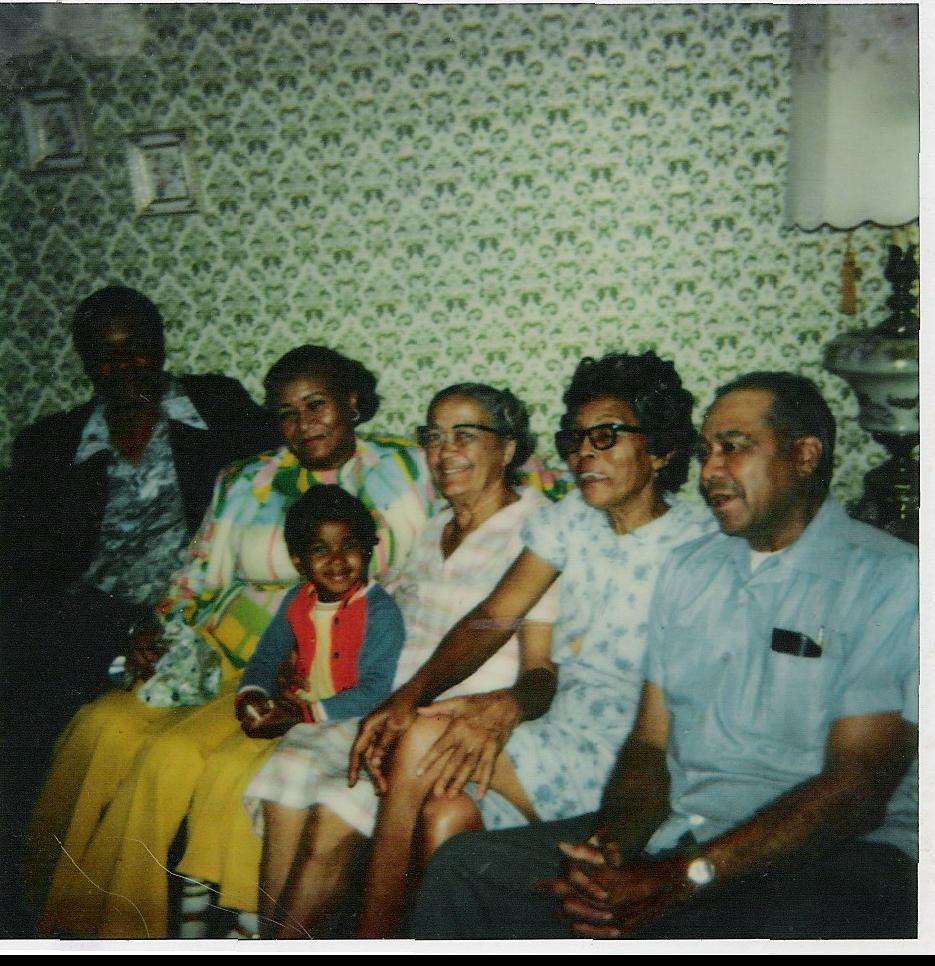
as i’m reflecting on my age and the age i live in, this picture always comes to mind. it’s me, my mom, my grandma, my great grandma, and my great-great grandma. these women sacrificed and lived with secrets, lies, and shames so i could exist. they gave me a sense of unconditional love that it’s taken me until recently to understand isn’t universal. we weren’t rich but they gave me a richness in character that comes from a pride that they didn’t always have. they also gave me hangups that i can now see were necessary for their existence that aren’t necessary for mine. but i needed them to know what i don’t want. they instilled in me a love and respect for education, but not just the book sense, for learning about the world and a belief that anything and everything is possible. they were proud of me but let me know that my excellence wasn’t an anomaly, it was what was expected of me. to whom much is given much is required. this from women who picked cotton. who came north for better lives and carved them out. who loved men who, while not always physical faithful, were fiercely loyal and loved them implicitly. and they were not victims. they were these fierce creatures who loved hard, drank hard, smoked, fought and raised a strange crop of progeny.

My Grandpa, his mom, me, my great grandpa's mom, great grandma, great granddad

My Grandpa, his mom, me, my great grandpa’s mom, great grandma, great granddad

ons

quarkhenares:

it’s that time of the year again…

nevver:

Honest Best Picture Nominees Posters

My Favorite Things on TV now are commercials

I love them.  They used to be what I turned away from but now I actually find them more interesting than the broadcast shows that surround them.  I’m a big preacher of the fact that the medium is based on commercials as it evolved from its blind version- radio.  It was Philip Morris who helped us love Lucy, et cetera, et cetera.  I contend that if we would watch commercials 24h a day that’s what we’d have. [If they could just show commercials…]  but then commercials have to become something we were aware of Pay No Attention To the Man behind the Curtain.  We just wanted to sell luxury cars in a recession.  We like poking fun at corporate CEO by having them look silly with cornrows in their hair to make them like safe puppy people.  Sure they’ve paid their hair braider with your grandchildren’s college fund, but he felt like something different today.  Isn’t that cute.  

Of course commercials became irreverent.  They turned in on themselves and became the butt of their own jokes particularly in the 21st century where everything not so old is new again.  

Since we’re votaries of nostalgia the sky’s the limit.  Old concepts become new to an increasingly youthful culture whose concept of history begins at their birth.

Commercials are so good that you don’t often know what’s being sold.  It doesn’t matter anyway because it’s more a lifestyle that’s being sold than any products.  Products are by-products of lifestyle.

Or is it that we don’t care?  I mean, I don’t have a car- but I know how not to pay a lot for car insurance.  The IT commercial for eBay was so hilarious to me I wanted to tape it (I live in the dark ages of video tapes) so I could watch it all the time.  As a staunch anti commercialist the real problem is that I’m just discovering what Madison Ave. has known for years.

Advertising works.  Okay, so I’ve known it for some time now.  I’ve known it intellectually.  I have all of these pieces of paper saying I should know better than anybody.  But what I need you to understand is that I knew I was immune to it.  I know what they’re doing.  I’m above this because I actually work with the man behind the mirror.  

But I have to say, I have recently bought more bullshit that I don’t need.  The more money I don’t have, the more I need something off of eBay (okay, eBay seems to be a theme/ problem I might need to address with a shopping professional).

And in these times of devastation, blatant governmental corruption, war and crazy unemployment: commercials are more aggressively displaying beautiful lives of beautiful people showing us everything is okay.

But just when I’m rushing to my computer to type in “Popular Store with colorful commercials.com” I’m stopped by my all time favorites.  Drug commercials.  Drug commercials help me come to my senses about what’s really going on.  They might as well have Phillip Morris sponsor television again because their non-smoking commercials only make me want a cigarette.  I don’t buy it.  These people don’t believe it.  They want to smoke.  They don’t really want to stop.  I can see it in their eyes.  

My absolute favorite commercials right now are about prescription drugs.  I love them.  But more importantly I love the irony of when they’re shown.  Drugs for social anxiety during “Friends” and “Seinfeld”.  Drugs for impotence and female birth control during “Sex and the City” reruns.

Insomnia drugs teasing me when I’m watching X-Files at 2a.

The little circle thing that has such severe social anxiety that he can’t get it on with his little ladybug friend.  Man he broke my heart.

The woman with adult ADD… who hasn’t’ felt like that after like 5 cups of coffee before noon and no sleep cause the kids had a play, and your husband was going out of town.  When I saw what her mind would turn to…hell I’d be a little scattered too.

And sorry to say that it’s a dangerous game to ask New Yorkers particularly (and Americans in general) if they’re depressed, afraid to go outside, fearful of the future…? Well duh, yeah!  So that means that most of NY City would be like that little circle and start bouncing again?  Really?  

So if commercials work and there’s an overabundance of commercials selling drugs to fix things that most every human being has experienced- what kind of society are we building?  We told outright lies by the people who are supposed to Protect? Care? Represent us and told no no no, don’t believe your lying common senses.  

We’re being catered to as a bunch of bratty kids.  Life’s tough and beautiful.  But we’re getting told- sold, the idea that natural human behaviors and reactions to an increasingly unsure world, made that much more unsure by news agency that now hype things that have been happening since Caesar was still just a general, like washing machines and luxury cars.  Washing machines people need.  Luxury cars- not so much.

Along side of these drug ads are the ads telling parents to take personal responsibility for telling their kids to not take drugs.

The idea of personal responsibility is both heralded and demonized in a schizoid society where lies roll down from the top of gov’t like water and even under a litany of indictments we’re told to trust distrustful people.

So you smoked a little pot when you were younger- doesn’t matter.  U must tell your children how bad it is.  Whether you believe it or not, you’re a terrible parent if you don’t and your kids will end up like Robert Downey Jr. (Pre-Iron Man RDJ, I’ve always loved him and never gave up.  Tell him to call me.)

But if you’re anxious about talking to your kids about pot, take some Prozac. It’ll make it easier to not do drugs.

Are you serious?