Category Archives: Uncategorized

Open Letter to Michael Jackson

Dear Michael Jackson,
I’ve been needing talk to you for a long time… this is really difficult. Well, part of it is that I love you so and I don’t know what to do to help you. But I’ve got to tell you. YOU NEED HELP. Living in Dubai isn’t going to solve your problems, particularly if you don’t speak or read Arabic or understand the customs. (Although I’m sure it’s beautiful and will come visit you anytime.) You once told me you were going back to Indiana. I think that would be best.
Or, Maybe you should talk to Oprah. I’m sure she’ll talk to you. You can move into one of her complexes. She’ll call Lil’ Richard, Maya Angelou, Toni Morrison, and Dr. Phil. You guys will talk it out, eat some ribs or something. Work out whatever is making you CRAZIER THAN HELL. Excuse me. But I’m so frustrated right now because your behavior is affecting me adversely. I need to hear your voice. You have such a beautiful voice and it’s at the peak of it’s maturity. Just when I want to give up on you, you give me “Butterfly”. It’s beautiful. Your voice is beautiful.
Please stop being crazy. Let the bass come out in your speaking voice. Stop having slumber parties with little boys. Stop wearing sheila’s in Arab countries and going to ladies rooms. STOP BEING SO CRAZY.
We’ll discuss it more when we talk.

Love,
Charity

Arabian fright: Ladies’
rest room hi-Jacko’d

BY MICHELLE CARUSO
DAILY NEWS WEST COAST BUREAU CHIEF

Jacko’s blushing – and this time it’s not just his rouge.
The Queen, er, King of Pop, disguised in an Arabic woman’s head scarf, got caught fixing his face in a ladies’ bathroom in a Dubai shopping mall Saturday.
Cops were called to the scene to resolve a dispute between Jackson, 47, and a shocked Tunisian woman who snapped his picture as he primped at the mirror. No arrests were made, according to The Khaleej Times.
Maybe the wigged-one couldn’t read the Arabic word for “women” on the rest room door, or maybe he chose the ladies’ lounge rather than risk powdering his cheeks in a Middle Eastern men’s room.
Dubai Police Col. Abdul Jalil Mehdi said he believed the pop star made an “innocent mistake” in using the ladies’ loo, the Times said
Mehdi did not comment on Jackson’s choice of head-wear – the traditional Emerati women’s scarf known as “Sheila.”
A 37-year-old teacher, identified as Latifa M., “screamed in shock and ran out of the ladies room” in the Ibn Battuta Mall when she realized Jackson was a man, the Times said.
But the school-marm shutterbug went back and snapped some pictures of the pop star with her cell phone camera.
Jackson chased after the woman and demanded the photos. She refused and asked for “compensation,” the Times said.
The ruckus attracted cops, who told the teacher her demand for money was illegal. The photos were “erased,” the Times said.
Jackson has been living in Bahrain as a guest of the royal family since his acquittal on child molestation charges last summer. He recently purchased a secluded $1.5 million property in the Amwaj Islands and plans to make his home there, according to reports.
In the U.S., Jackson’s official Web site, MJJSource.com, is down. His longtime friend and makeup artist Karen Faye posted a note to fans saying the site “is down because we have had no cooperation with Michael and his present team. … We were Michael’s voice, but if he doesn’t wish to speak or pay his bills for MJJSource, there is nothing we can do.”

Okay, now it’s your turn

I’d like to get comments answering the questions:
What are some things you wish you knew in your 20’s?

a bit about my "missionary work" as my mom calls it

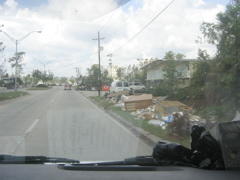
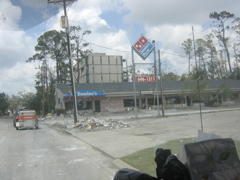
so i’ve decided that i’m going to write and go to the gym everyday i’m not working for american dollars. the story i’m writing now is driving me a little crazy, but i have sent an old story out and feel productive. i guess i should write something about my going to new orleans to take supplies, but it was so surreal i don’t really have much comment on it. Delissa, the owner of the wonderful bar sepia (downstairs if that tells you anything about my struggles) and friend, organized for us to drive down there and take the donations left at the bar. we drove the 22h with mr. hooper (quite unexpectedly- but he donated the truck) and literally dropped the stuff and started DRIVING BACK!

one thing that D said that has stayed with me was that there were no thank you’s. my first response was, yeah- but we didn’t do it for thank you’s. but that doesn’t mean that as a human being you don’t say thank you. we couldn’t get the boxes of clothes off of the trucks fast enough before they were being ripped through. the statements that stand out in my head most are “where are the plus sizes?” and woman holding up a pair of pants saying “who can wear these little things?”. it was a bit of an anticlimax. i don’t know what i expected really, but i didn’t expect that.

i don’t know. i say thank you to everybody for every little thing. driving through slidell, seeing the utter destruction and feeling the devastation moments before this lead me to believe everyone must be in a state of shock. but i’m sure it goes deeper than that into a number of class/ political issues that are ugly, complex and that i’m still suppressing.

a bit about my “missionary work” as my mom calls it

so i’ve decided that i’m going to write and go to the gym everyday i’m not working for american dollars.  the story i’m writing now is driving me a little crazy, but i have sent an old story out and feel productive. i guess i should write something about my going to new orleans to take supplies, but it was so surreal i don’t really have much comment on it. Delissa, the owner of the wonderful bar sepia (downstairs if that tells you anything about my struggles) and friend, organized for us to drive down there and take the donations left at the bar. we drove the 22h with mr. hooper (quite unexpectedly- but he donated the truck) and literally dropped the stuff and started DRIVING BACK!

one thing that D said that has stayed with me was that there were no thank you’s. my first response was, yeah- but we didn’t do it for thank you’s. but that doesn’t mean that as a human being you don’t say thank you. we couldn’t get the boxes of clothes off of the trucks fast enough before they were being ripped through. the statements that stand out in my head most are “where are the plus sizes?” and woman holding up a pair of pants saying “who can wear these little things?”. it was a bit of an anticlimax. i don’t know what i expected really, but i didn’t expect that.

i don’t know. i say thank you to everybody for every little thing. driving through slidell, seeing the utter destruction and feeling the devastation moments before this lead me to believe everyone must be in a state of shock. but i’m sure it goes deeper than that into a number of class/ political issues that are ugly, complex and that i’m still suppressing.

It Ain’t Free

The removal of cultural boundaries creates familiarity amongst people. In a world where before 9.11 cultural boundaries were closing the world’s economies became more centralized and the international language of money was required social cache; one could sit in any country with a Viacom (for example) satellite office and watch any number of the mega conglom’s subsidiaries in whatever language was needed to get people to spend. This was the model that worked in America and it would work everywhere else- NOT! The gross income for Liberian family is $114 US. That’s some American kid’s weekly allowance.

America pumps it’s market driven interests throughout the globe only to naively ask, “Why do people hate us?” and then answer their own question with “because we’re free”. Now I now one true about my life – IT AIN’T FREE.

Art ain’t free. It’s very expensive when working within the capitalist model. Working outside that model? Here in the US that’s called underground. To be an underground artist takes work and perserverance and either rich parents or a job that’ll pay a living wage. Not that it can’t be done- but we’re talking about models here. Sure the underground model can work. It builds prestige, a market base and respect among comrades. But will it support you? Probably not. And I’m sure there is somebody this has worked for but I’m talking about large monetary scale support. Any hip-hop created outside the states is underground in the US. Any art aimed at communities of color that isn’t commercially marketed is called underground.

Underground is what it is because it’s outside the radar of populust consumptionist culture. Once the underground moves into the light of success it loses the edge of it’s alleged pre capitalist roots. Finding diasporic artistic movements and contributions is an effort to Americans. To find out about different (read as non American) forms of artistic revolutions takes effort. It takes time and desire to experience something else. Why when bred in a culture that tells you that you are what everyone else on the planet either wants to be or destroy, would you look outside to find other modes of artistic expression? MTV et al barely show non mass produced music and images from within the US. When you’re told that art is either an imitation or a negation of what you believe to be art, why would you not believe that your expressions (and for this generation of “urban” youth it’s hip hop) can’t be translated into a global struggle against oppression?

Why can’t we Americans get up off of that? Because it’s a “Lovely Day” when the Gap tells us to all look alike like most proletarian/ elite models. We see through the unitarianism of our systems, not specifically governmental, but the transnational bent of American corporations the need to create a consistent market base for their products. Moving through cultural differences we see that colored artists all over the world living in “decolonized” war zones are moving in a similar rhythm.

True power comes from controlling one’s own destiny. Money is not (always) the answer to that problem. Changes in policy, educational curriculum, early cultural and media studies education are some of the steps to freeing the minds of youth of color to see the links they are in the struggle for the global destruction of white supremacist capitalist patriarchy.

Many Contracts for Storm Work Raise Questions

September 26, 2005
Many Contracts for Storm Work Raise Questions
By ERIC LIPTON and RON NIXON
Editors’ Note Appended

WASHINGTON, Sept. 25 – Topping the federal government’s list of costs related to Hurricane Katrina is the $568 million in contracts for debris removal landed by a Florida company with ties to Mississippi’s Republican governor. Near the bottom is an $89.95 bill for a pair of brown steel-toe shoes bought by an Environmental Protection Agency worker in Baton Rouge, La.

The first detailed tally of commitments from federal agencies since Hurricane Katrina hit the Gulf Coast four weeks ago shows that more than 15 contracts exceed $100 million, including 5 of $500 million or more. Most of those were for clearing away the trees, homes and cars strewn across the region; purchasing trailers and mobile homes; or providing trucks, ships, buses and planes.

More than 80 percent of the $1.5 billion in contracts signed by the Federal Emergency Management Agency alone were awarded without bidding or with limited competition, government records show, provoking concerns among auditors and government officials about the potential for favoritism or abuse.

Already, questions have been raised about the political connections of two major contractors – the Shaw Group and Kellogg, Brown & Root, a subsidiary of Halliburton – that have been represented by the lobbyist Joe M. Allbaugh, President Bush’s former campaign manager and a former leader of FEMA.

“When you do something like this, you do increase the vulnerability for fraud, plain waste, abuse and mismanagement,” said Richard L. Skinner, the inspector general for the Department of Homeland Security, who said 60 members of his staff were examining Hurricane Katrina contracts. “We are very apprehensive about what we are seeing.”

Bills have come in for deals that apparently were clinched with a handshake, with no documentation to back them up, said Mr. Skinner, who declined to provide details.

“Most, if not all, of these people down there were trying to do the right thing,” he said. “They were under a lot of pressure and they took a lot of shortcuts that may have resulted in a lot of waste.”

Congress appropriated $62.3 billion in emergency financing after Hurricane Katrina struck. So far, a total of $15.8 billion has been allocated from a FEMA-managed disaster relief fund, of which $11.6 billion has been committed through contracts, direct aid to individuals or work performed by government agencies.

An examination of the contracts granted to date and interviews with state and federal officials raised concerns about some of the awards.

Some industry and government officials questioned the costs of the debris-removal contracts, saying the Army Corps of Engineers had allowed a rate that was too high. And Congressional investigators are looking into the $568 million awarded to AshBritt, a Pompano Beach, Fla., company that was a client of the former lobbying firm of Gov. Haley Barbour of Mississippi.

The investigators are asking how much money AshBritt will collect and, in turn, what it will pay subcontractors performing the work, said a House investigator who did not want her name used because she was not authorized to speak publicly about the matter.

The contracts also show considerable price disparities: travel trailers costing $15,000 to $23,000, housing inspection services that documents suggest could cost $15 to $81 per home, and ferries and ships being used for temporary housing that cost $13 million to $70 million for six months.

For some smaller companies, the recovery work will be an extraordinary test. For example, Aduddell Roofing and Sheet Metal, an Oklahoma City business run by a former steer wrestler, shares with a partner a $60 million contract to install temporary roofing on houses in Mississippi. Aduddell’s single biggest contract before this was for $5 million, company executives said.

Some businesses awarded large contracts have long records of performing similar work, but they also have had some problems. CH2M Hill and the Fluor Corporation, two global engineering companies awarded a total of $250 million in contracts, were previously cited by regulators for safety violations at a weapons plant cleanup.

The Bechtel Corporation, awarded a contract that could be worth $100 million, is under scrutiny for its oversight of the “Big Dig” construction project in Boston. And Kellogg, Brown & Root, which was given $60 million in contracts, was rebuked by federal auditors for unsubstantiated billing from the Iraq reconstruction and criticized for bills like $100-per-bag laundry service. All of the companies have publicly defended their performance.

Representative Bennie Thompson of Mississippi, the ranking Democrat on the House Homeland Security Committee, complained that FEMA and other federal agencies were delivering too much of the work to giant corporations with political connections, instead of local companies or minority-owned businesses.

“There is just more of the good-old-boy system, taking care of its political allies,” Mr. Thompson said. “FEMA and the others have put out these contracts in such a haphazard manner, I don’t know how they can come up with anything that is accountable to the taxpayers.”

As of last week, the federal government was spending more than $263 million a day on the recovery effort.

“There was a crisis situation and a lot of very quick contracting was done,” said Greg Rothwell, the chief procurement officer at the Department of Homeland Security. “We will be looking at every invoice we get to make sure we were not paying extraordinary prices.”

While several federal agencies have approved contracts, FEMA and the Army Corps of Engineers, by design, have spent the most so far, according to the list of contracts from federal government agencies assembled by The New York Times.

Much of the spending has been in large amounts, but the contracts also include entries like $80,000 from a company called Bama Jama for clothing adorned with the E.P.A. logo and $3,300 for Doc’s Laundry and Linen in Baton Rouge.

Rapidly buying the goods and services needed to respond to an emergency is difficult for any government agency. Federal contracting rules allow agencies to approve deals without standard competitive bidding in “urgent and compelling circumstances.”

To provide some safeguards, federal agencies can hold an open competition in advance for products routinely needed in emergencies. Such agreements are known as “indefinite delivery, indefinite quantity,” or I.D.I.Q. contracts.

The Defense Department relied on that type of contract in assigning Kellogg, Brown & Root to perform more than $45 million in repairs to levees in New Orleans and military facilities in the gulf region.

Records show, however, that FEMA did not use this approach for the blue sheeting used to cover holes in roofs, a standard item in the disaster tool kit. Instead, the agency bought $6.6 million of the material from All American Poly of Piscataway, N.J., on Sept. 13, without full competitive bidding.

Before signing contracts with mobile-home and travel-trailer makers worth in excess of $1 billion, FEMA said it did solicit bids. But the awards were made without the standard open competition required for government contracts.

Mr. Rothwell, of the Homeland Security Department, said FEMA needed to expand its number of I.D.I.Q. agreements so that when disasters struck it could bring in contractors more quickly and at a competitive price.

The two most expensive services the government has signed contracts for so far are manufactured housing and debris removal, which alone have totaled $2 billion, according to contracting records.

The debris contracts have attracted the scrutiny of investigators from the House Homeland Security Committee, in part because of the price agreed to by the Army Corps of Engineers.

AshBritt, which has won the biggest share of those contracts, is being paid about $15 per cubic yard to collect and process debris, federal officials said. It is also being reimbursed for costs if it has to dispose of material in landfills.

But three communities in Mississippi, which found their own contractors rather than accept the terms offered by AshBritt, have negotiated contracts of $10.64 a cubic yard to $18.25 a cubic yard, including collection, processing and disposal.

And other experts have questioned AshBritt’s fees. “Let me put it to you this way: If $15 was my best price, I would rebid it,” said Mike Carroll, a municipal official in Orlando, Fla., with experience in hurricane cleanup.

AshBritt has cleaned up debris for FEMA and other government agencies after other hurricanes. Besides possessing a huge roster of subcontractors and the logistics expertise to route hundreds of trucks, the company is also politically well connected.

According to Senate filings, AshBritt paid about $40,000 in the first half of 2005 to Barbour Griffith & Rogers, the Washington lobbying firm co-founded by Governor Barbour of Mississippi, who is also a former chairman of the Republican National Committee.

AshBritt officials declined to comment on the Hurricane Katrina contracts. Jean Todd, a federal contracting officer who helps oversee the AshBritt deal for the Army Corps of Engineers, said she was determined to ensure that the price was fair.

“We have auditors that will be looking at all of this,” Ms. Todd said.

FEMA has led the effort to line up contractors to install tens of thousand of temporary homes. The scale of the job is still unclear – depending on demand, FEMA may downsize its plans – but the agency has been rushing to buy as many travel trailers and mobile homes as it can. It has signed five contracts each worth more than $100 million with major manufacturers. And it has scoured the country, buying up whatever it can find on dealers’ lots.

That has turned into a bonanza for businesses like Wagner’s RV Center in Suamico, Wis., which sold 69 trailers to FEMA for $1.3 million.

“In a single sale, we cleared out most of our leftover inventory from the 2005 model year,” said Leonard Wagner, the owner of the RV center. “That does not happen very often.”

For some small businesses, what started off as big contracts have quickly grown into giant ones. Aduddell Roofing, the Oklahoma City business, was first hired with a partner on a $10 million contract. In a matter of weeks, that deal had grown into a $60 million contract.

The project is being run by Timothy Aduddell, the company’s president, who until recently was on the professional rodeo circuit, said Ron Carte, the chief executive of Zenex International, the company that owns Aduddell.

“You have to be there to see it,” Mr. Carte said of the hurricane work. “As Mr. Aduddell says, ‘It’s pretty cowboy.’ “

Editors’ NoteTuesday, Sept. 27, 2005
A front-page article yesterday reported on the awarding of billions of dollars in federal contracts to help rebuild the Gulf Coast after Hurricane Katrina. The article said many contracts had been awarded without bidding or with limited competition, and it cited two major contractors whose political connections have already raised questions among government officials about the potential for favoritism or abuse.

In naming these contractors – the Shaw Group and Kellogg, Brown & Root, a subsidiary of Halliburton – the article noted that they have been represented by the lobbyist Joe M. Allbaugh, President Bush’s former campaign manager and a former leader of the Federal Emergency Management Agency.

The article should have carried a response from Mr. Allbaugh, or restated a position he expressed in an earlier article in The Times: that he does not help any of his clients secure federal contracts, and has not done so in this case for Shaw or Kellogg.

Eric Dash and Leslie Eaton contributed reporting from New York for this article.

Copyright 2005 The New York Times Company

me and my generations

as i’m reflecting on my age and the age i live in, this picture always comes to mind. it’s me, my mom, my grandma, my great grandma, and my great-great grandma. these women sacrificed and lived with secrets, lies, and shames so i could exist. they gave me a sense of unconditional love that it’s taken me until recently to understand isn’t universal. we weren’t rich but they gave me a richness in character that comes from a pride that they didn’t always have. they also gave me hangups that i can now see were necessary for their existance that aren’t necessary for mine. but i needed them to know what i don’t want. they instilled in me a love and respect for education, but not just the book sense, for learning about the world and a belief that anything and everything is possible. they were proud of me but let me know that my excellence wasn’t an anomoly, it was what was expected of me. to whom much is given much is required. this from women who picked cotton. who came north for better lives and carved them out. who loved men who, while not always physical faithful, were fiercely loyal and loved them implicitly. and they were not victims. they were these fierce creatures who loved hard, drank hard, smoked, fought and raised a strange crop of progeny.

Really?!

i’m standing in times square, in front of 1515 broadway, watching kanye west’s video for “gold digger” on a crystal clear movie theater sized screen in gorgeous HD. the video show beautiful, sexy, shiny, thin half dressed black women done up like pin-up girls. jamie foxx and kanye are just singing and the captions show the song lyrics “i’m not saying she’s a gold digger, but she ain’t messing with no broke niggaz”… hmmm. interesting. okay, oh, here come the girls again. so i look up and then i look at the street. these aren’t the women i see walking down the street. only women coming out of 1515 even vaguely resemble these shiny, sexy, gyrating girls. the women i see are tired, overweight, run down, leaving work or on their way to work. they don’t want to hear some spoiled brat pontificating the benefits of dating poor men because of the ambitious look in his eyes. but who are these women? who are these men? and why must i be subjected to this when i’m walking down the street or going to work. granted, i work at mtv this week, but i don’t watch mtv in public. yet how can i complain about one of the most mediated spaces in the world being more mediated? because i can.